BgLocal-Secrets-The-5-Best-Wildlife-Viewing-Spots-Around-Jasper-Albertac81768_0a1f6965f777480dbf784b0ba700fd44.jpg

Local Secrets: The 5 Best Wildlife Viewing Spots Around Jasper Alberta

By Clint Griffiths, Overlander Mountain Lodge

One of the biggest reasons people come to Jasper National Park is to see the wildlife. It's a bit like driving through an open zoo, except of course the animals are wild. Every summer, visitors pull over with their cameras out, hoping to see these animals in their natural habitat.

I was born here and have lived in this valley for 52 years. My family has welcomed visitors at the East Gate since 1993, and I've explored this park hiking, snowboarding, mountain biking, rock climbing and soaking in the hot springs. Except for the elk photo at the top, every photo in this post is one I took myself on the many drives I've made back and forth through this valley.

Something most visitors don't realize is that some of the best wildlife viewing in the park is on the east side, just past our door. It's where many of the paid wildlife tours go, and you can see it for free just by driving the highway.

And I've saved one secret spot for the end: a place where mountain sheep may have gathered for so long that a mountain was named after them, long before the first Europeans arrived.

I've listed these spots in order from the East Gate toward the town of Jasper, finishing back at our door, with a bonus secret spot at the end. That's the drive you'll want to do anyway once you've read my email series.

A bit of history first. This valley was a prime hunting ground long before it became a park. Today we come here to look at the animals, but for thousands of years people came here to survive. And the elk you'll see everywhere weren't always common. Most of today's herds descend from elk brought up from the United States, and they've multiplied since. Bison once lived here too, but not anymore.

At the end of this post I share some tips for viewing wildlife safely. Please read them carefully, for your own protection and the animals'. Knowing these spots also helps you avoid hitting an animal, or the tourists stopped in the road to look at one.

Want all my secret spots on one map? Get my free Local's Secrets map: a printable copy plus a Google Map that works offline. Cell service drops in much of the park, so you'll want it before you go. Get the Local's Secrets map →
Overlander Mountain Lodge.png

1. Miette Hot Springs Road (10 minutes from the lodge)

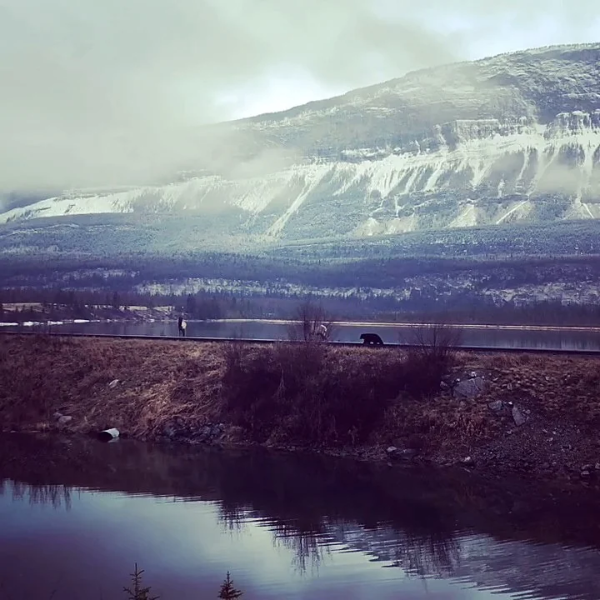
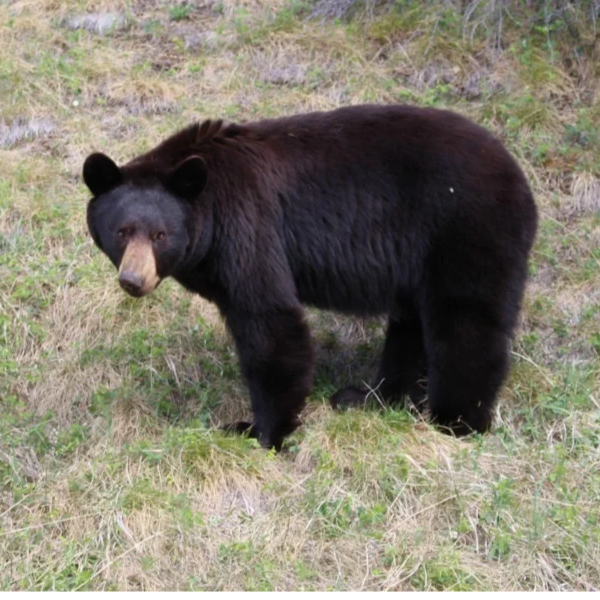
The closest I've ever been to a bear was on this road: twice from the safety of my car and once on my mountain bike. The road is narrow and runs right into the mountains, so when a bear is on the shoulder, you're right beside it. I took this picture from the car with a zoom lens. I would never get this close to a bear outside my car.

One time I rode my bike from the Overlander up to the hot springs. A bear was on the side of the road and people had stopped to look. I waited until he seemed uninterested, then rode past. My heart was pounding. I'm sure he couldn't have cared less, but the thought that he might chase me was definitely there.

At the top of the road are the hot springs, and surprisingly, the parking lot is another great spot. Bighorn sheep often hang out there eating grass and licking salt off the cars. You can get quite close, but as with all wildlife, keep a safe distance. They're wild and unpredictable.

Overlander Mountain Lodge (1).png

2. Past Disaster Point and the Talbot Lake Boat Launch (heading west toward town)

"Wildlife jams," we call them. Everyone stops to look at the animals and forgets about traffic. People park in the middle of the road and get out with their cameras. There's often one just after Disaster Point as you drive west from us toward town. (Sign up for the email series to find out how Disaster Point got its name.)

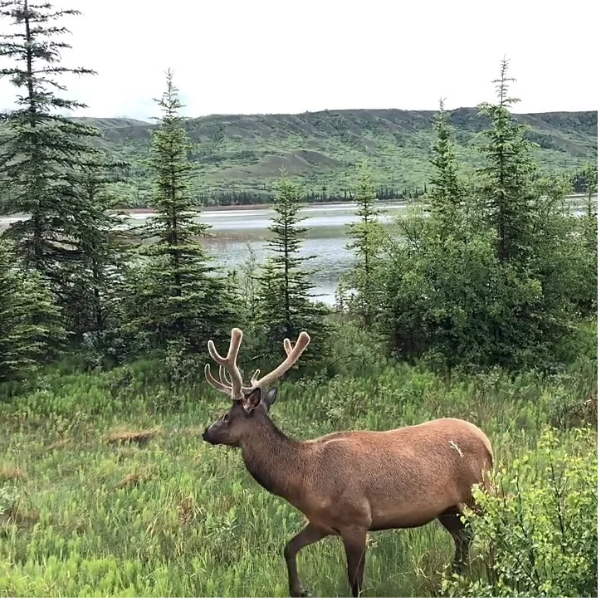
This is where the photo at the top of this post was taken, by a local photographer I hired 15 years ago. Locals used to call those two elk "the boys" because they were always there. Lately there's only been one of them. I've seen bears here as well.

3. Jasper Lake and Edna's Knoll

Jasper Lake isn't really a lake. It's where the Athabasca River gets so wide that it looks like one. For years only locals stopped here, until about 10 years ago when they put in a pullout with parking. The water is shallow and the bottom is all sand, so you can walk a long way out and only be up to your knees. It's much warmer than the glacier-fed lakes, too.

Right across the highway is Edna's Knoll, and bighorn sheep often walk down to the road here. The last time I was there, a group of them came right up beside where we were sitting. If you want an amazing view of the valley, Edna's Knoll is a short, steep hike that leaves from the Talbot Lake pullout (not the boat launch).

Overlander Mountain Lodge (2).png

4. The Palisades

Across from the Palisades, near the airstrip, there's a huge grassy field. You'll see the wildlife tour buses pulled over here. Often, though not always, you'll see herds of elk and sometimes bears. This is one of the easier jams to handle, because the road is straight for a long way and you can see people pulled over well ahead of time.

There's a fascinating story about this place that I came across while learning the Indigenous history of the valley. It's much too long to tell here, but it's in another of my posts that you'll get when you join my email list.

Overlander Mountain Lodge (3).png

5. Right Outside Your Door: The Overlander and Folding Mountain

When I was managing the Overlander and obsessed with mountain biking, some days I couldn't get into Jasper, so I'd sneak in a quick training ride around the property at lunch. You'd think I wouldn't see much so close to the lodge, but I ran into bears and deer all the time. Grouse hide in the trees too, and they'll give you a scare when they suddenly flutter off.

I once had a cougar run across the road in front of me as I drove from the Overlander to Folding Mountain. That's the only cougar I've seen in my whole life, so don't worry too much. You're very unlikely to see one.

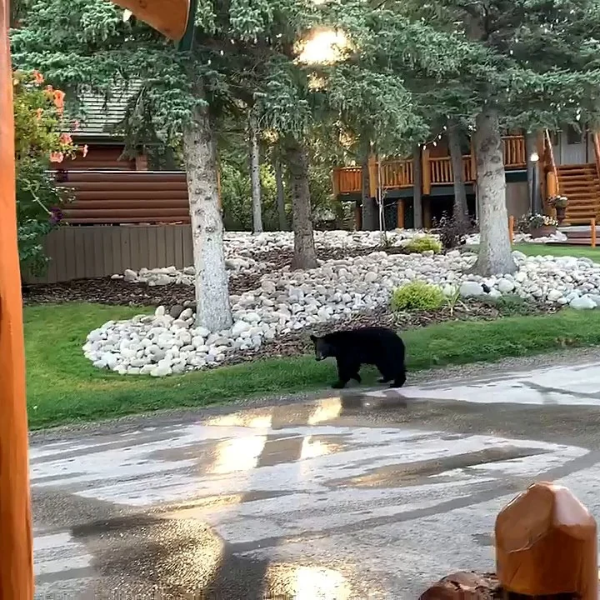
My favourite bear story belongs to my dad. One morning he went over to open the lodge and heard something in the bottle room, where we keep the empty wine bottles and which has its own outside door. He opened it and found a bear inside. How he didn't have a heart attack is beyond me. He shut the door, and Fish and Wildlife came out and tranquilized the bear.

We've had plenty of furry "visitors" walk right past the cabins. That's one of the real benefits of staying at the East Gate: the wildlife is right outside your door, without the townsite crowds. See our cabins and chalets →

Overlander Mountain Lodge (4).png

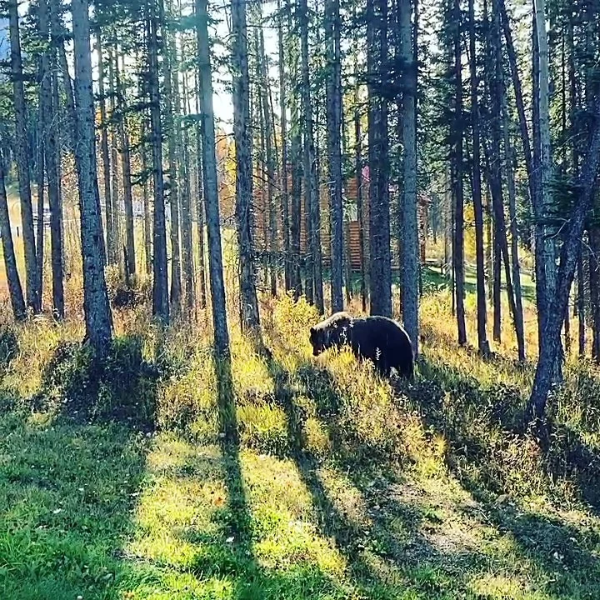
And it's not just black bears. This grizzly was foraging in the trees right outside the cabins at our sister property, Jasper East Cabins, just down the road.

Overlander Mountain Lodge (5).png

Bonus: The Secret Spot (just before Disaster Point)

Driving west from us toward town, you'll pass the pullout for Hidden Valley on your left, and right after it the pullout at Disaster Point. Watch the slopes and the highway shoulders along this stretch, below Roche Miette.

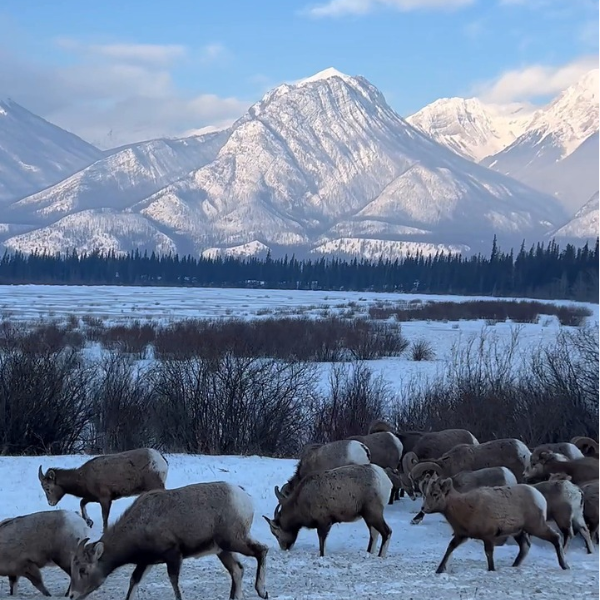
The reason it's a secret isn't that no one knows about it. It's probably the most likely place you'll see bighorn sheep. If you're lucky, once in a while you'll spot mountain goats too, but that's pretty rare. The secret is how long those sheep have been there. They may have been on that mountain so long that it was named after them. There are a few theories on where the name Roche Miette came from, but one is that "Miette" comes from the Cree word for bighorn sheep, mâyatihk (MY-uh-tick).

It was this exact question, what this mountain was named after, that led me down the path of uncovering the hidden history of the east end of the park. That's what I write about in my email series. Join the Local's Secrets list →

Wildlife Safety Tips

There aren't many places left in the world where you can see animals like these from your car. As more people visit, the wildlife jams get bigger, and in the excitement people forget the basics. Please keep these in mind:

  1. Remember you're on a highway. I've seen people brake hard, put the car in park and get out to take pictures. I know it's exciting, but many of the drivers behind you are locals commuting to work. If you stop, pull completely off the road and get out carefully.
  2. These are wild animals. An elk can look as calm as a cow on a farm, but the cow is domesticated and the elk is wild. Parks Canada asks you to stay at least 30 metres from elk, sheep and goats, and 100 metres from bears. Zoom in for the shot instead of walking closer.
  3. Watch the shoulders. Elk, deer and bighorn sheep often graze beside the road, especially at dawn and dusk. Slow down, scan the edges, and if you see one animal, assume there are more nearby.
  4. Never feed the wildlife. Someone once told me they watched a tourist put honey on their hand so a bear would lick it off. I wasn't there, and honestly, I have no words. Feeding wildlife is illegal in the park, and a bear that learns to approach people usually ends up being destroyed. As we say here, a fed bear is a dead bear.

Why I'm Rewriting These Posts

Fifteen years ago I started writing posts for the Overlander blog. Then I took on other challenges, like becoming an Ashtanga yoga teacher and starting my own business. While I was away, a marketing company wrote posts for us, and they reused this one of mine. I'm slowly going back through them and rewriting them myself.

The internet is filling up with so much generic "content" that it's getting hard to find real people writing real posts. If you want the Jasper only a local knows, the best place to find it is my email list. Join the Local's Secrets list →